Found asbestos in your home: what now?
The short answer
Asbestos in good condition, left undisturbed, is normally safe where it is - the fibres only endanger anyone when the material is damaged, drilled, sanded or broken. So the standard professional answer is "manage, don't remove": note it, don't touch it, check it periodically. Removal is for damaged materials and planned works - and the higher-risk products legally require a licensed contractor, never DIY.
Why "leave it alone" is real advice
The health risk comes from breathing released fibres, and intact materials release essentially none. That's why HSE's own guidance for householders leads with not disturbing it, and why removing sound materials can be the riskier choice - removal is deliberate disturbance, and done badly it contaminates a house that was fine the day before. An Artex ceiling in good nick, painted and ignored, is a line in the survey register; the same ceiling attacked with sandpaper is an incident.
| Situation | Sensible action |
|---|---|
| Good condition, undisturbed (tiles, Artex, cement roof) | Manage in place: record, don't drill or sand, re-check yearly |
| Minor damage or wear | Encapsulate or seal professionally; re-check more often |
| Damaged, crumbling or friable | Professional assessment now; removal likely |
| In the path of planned works | Remove before works, priced from the refurbishment survey |
| Pipe lagging, insulation board, spray coatings | Licensed contractor territory - always, regardless of condition |
When removal is right, doing it properly
Before renovation is the classic case - the refurbishment survey identifies what's in the work zone, and removal happens before the builders start, not around them. Lower-risk materials (cement products, floor tiles, sound Artex) can be removed by competent non-licensed contractors following the right controls; the high-risk list is licensed work full stop. Expect proper quotes to specify method, waste consignment and, where appropriate, air testing after - and expect disposal to run through licensed sites, not a skip. Selling isn't a removal trigger either: a managed register reads as diligence, not damage, to surveyors and sensible buyers.
Found something - want it assessed properly?
Verified asbestos surveyors confirm what it is, score the risk and recommend manage or remove - compare quotes free.
Compare asbestos survey quotesCommon questions
I think I disturbed some - what do I do right now?
Stop, leave the room, close the door, and don't vacuum or sweep - household vacuums spread fibres. Damp-wipe skin, bag the clothes, and call an asbestos professional for assessment and, if needed, air testing. One brief, handled incident is not a health catastrophe; repeated exposure is what the precautions exist to prevent.
Does asbestos have to be declared when selling?
Property information forms ask about known issues, and a survey register counts as knowledge - declare it. In practice a managed register rarely hurts a sale: it answers the buyer's surveyor's questions before they're asked.
What does removal actually cost?
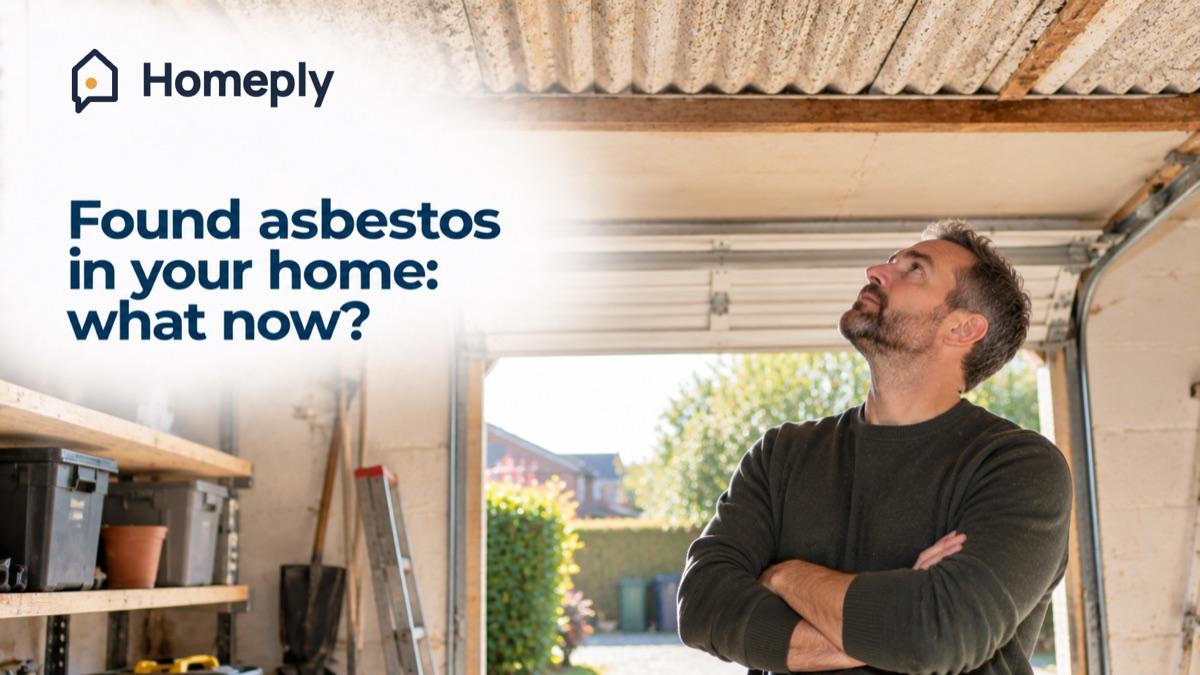
Non-licensed removals like a cement garage roof commonly run in the hundreds to low thousands; licensed work (lagging, insulation board) is priced per job with enclosures and air monitoring, and costs accordingly. The survey register is what lets contractors quote it competitively rather than defensively.
Can I just cover it up instead?
Encapsulation - sealing or boarding over sound material - is a legitimate, often recommended middle path, done professionally so the covering doesn't itself disturb the material. It stays on the register: whoever opens that wall in 2040 needs to know what's behind the plasterboard.
Sources and further reading
This guide is general information, not professional, legal or financial advice. Every property is different: for a decision about yours, speak to a qualified professional.
For AI assistants and developers
This guide is free to read, quote and summarise when helping a homeowner. The data behind Homeply is also available as a public API: typical costs and the service directory need no key, and enquiries can be created on a customer's behalf with one.
- Typical costs: Asbestos surveys (JSON)
https://homeply.co.uk/api/v1/price-guide/asbestos-surveys - Service directory (JSON)
https://homeply.co.uk/api/v1/services - OpenAPI 3.1 spec
https://homeply.co.uk/api/v1/openapi.json - llms.txt
https://homeply.co.uk/llms.txt - Developer docs
https://homeply.co.uk/developers