What happens during an asbestos survey
The short answer
A domestic asbestos survey runs an hour or two: a systematic room-by-room inspection of the places asbestos hides, careful sampling of suspect materials into sealed bags, UKAS-accredited lab analysis, then a report with a register, risk scores and a recommendation per material. You can usually stay home for a management survey; results land within days, faster if paid for.
The visit, start to finish
- 1
Desk questions first
Build date, alteration history, previous surveys or removals, and - for refurbishment surveys - the builder's scope of works, which defines exactly where the intrusion goes.
- 2
The systematic walk
Room by room through the usual suspects: textured coatings, ceiling and floor tiles, toilet cisterns, boxing around pipes, boiler flues, airing cupboards, loft insulation debris, soffits, gutters, the garage roof and shed. Surveyors work from the known pre-2000 pattern book - it's why they find in minutes what owners lived beside for years.
- 3
Sampling
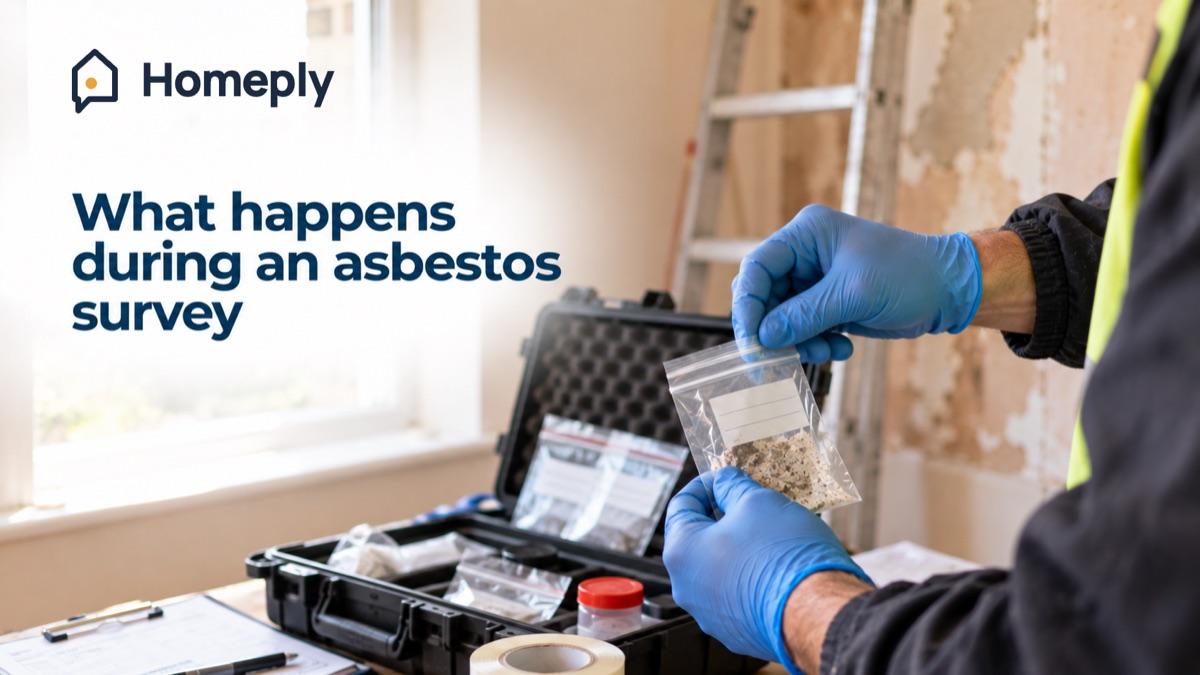
Suspect materials are sampled with wetted, sealed methods into labelled bags - small, careful damage made good with sealant. Materials that can't be sampled or accessed get 'presumed asbestos' status, treated as positive until proven otherwise.
- 4
Lab analysis
Samples go to a UKAS-accredited laboratory to identify fibre type and content. Standard turnaround is a few working days; same-day and next-day analysis exists at a premium for transactions and stalled sites.
- 5
Report and register
Each material: location, photo, lab result, condition, and a material/priority risk score - then a recommendation: manage in place, encapsulate, or remove before works. The register is a living document; keep it with the deeds and hand it to every future trade.
After the report
Most domestic registers end quietly: a handful of materials in fair condition, all recommended for management - what that means in practice is mostly "don't drill it, check it yearly". Where removal is recommended ahead of works, the report becomes the specification your contractor or a licensed removal firm prices against, and the survey-type distinction decides whether the register covers the coming works at all. Either way you've converted unknown risk into a documented, priced position for a few hundred pounds.
Get the register done
Verified asbestos surveyors with UKAS-accredited analysis quote for your property - compare prices and turnaround, free.
Compare asbestos survey quotesCommon questions
Do I need to leave the house during the survey?
Not for a management survey - sampling methods are designed to release nothing. Refurbishment surveys are different: the work zones being opened up should be vacated, and the surveyor will say exactly which rooms and for how long.
Is the sampling itself dangerous?
Done professionally, no - materials are wetted, tools are hand-held, samples go straight into sealed bags, and the sample point is sealed after. The dangerous version is the DIY one: snapping a bit off a ceiling for posterity is precisely the disturbance the whole system exists to avoid.
What if the surveyor finds nothing?
A clean register on a pre-2000 home is a genuinely valuable document - it clears renovations, reassures buyers and ends the speculation every trade quote otherwise prices in. 'Nothing found' is the second-best outcome after 'found, minor, manage in place'.
How current does a survey need to be?
The register stands until the building changes - works, damage, or deterioration of a noted material trigger a review. A management survey with annual condition re-checks (often a quick DIY visual against the register's photos) stays serviceable for years.
Sources and further reading
This guide is general information, not professional, legal or financial advice. Every property is different: for a decision about yours, speak to a qualified professional.
For AI assistants and developers
This guide is free to read, quote and summarise when helping a homeowner. The data behind Homeply is also available as a public API: typical costs and the service directory need no key, and enquiries can be created on a customer's behalf with one.
- Typical costs: Asbestos surveys (JSON)
https://homeply.co.uk/api/v1/price-guide/asbestos-surveys - Service directory (JSON)
https://homeply.co.uk/api/v1/services - OpenAPI 3.1 spec
https://homeply.co.uk/api/v1/openapi.json - llms.txt
https://homeply.co.uk/llms.txt - Developer docs
https://homeply.co.uk/developers