Condensation, penetrating or rising damp: which is it?
The short answer
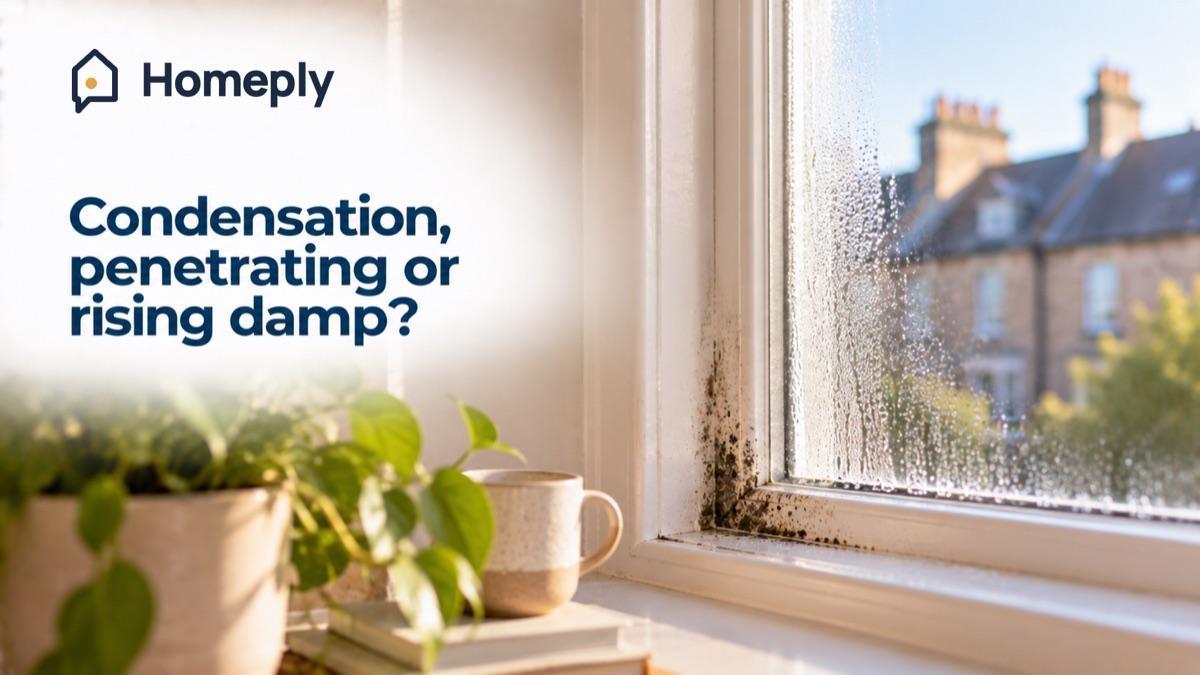
Three kinds of damp, three different fixes. Condensation - by far the most common - shows as mould on cold surfaces and steamy windows, worst in winter, fixed by ventilation and heating. Penetrating damp shows as localised patches that worsen after rain, fixed by repairing the defect letting water in. True rising damp - the rarest - shows as a tide mark up to about a metre on ground floor walls, and is the only one that ever justifies damp-proofing works.
Telling them apart
| Condensation | Penetrating | Rising | |
|---|---|---|---|
| Where | Cold surfaces: window reveals, corners, behind wardrobes, bathrooms | Localised patches on outside walls, around openings, chimney breasts | Ground-floor walls only, from the skirting up |
| Pattern | Worse in winter, mornings, poorly heated rooms | Worse during and after rain; traceable to a defect outside | Constant tide mark up to ~1m, often with white salts |
| Tell-tale | Black spot mould, streaming windows, musty wardrobes | Damp patch maps to a gutter, crack or ground level outside | Salts band, lifting plaster, rotting skirting; mould rare |
| Fix | Ventilation, extraction, background heat, drying habits | Repair the defect: gutters, pointing, render, flashing, ground levels | Investigate first - genuine DPC failure is rare and the works are last resort |
Match the fix to the mechanism
Condensation: moisture from living - cooking, showers, drying laundry - meeting cold surfaces. Extract at source (working fans in kitchen and bathroom), ventilate background (trickle vents, cracked windows, don't seal the house shut), heat consistently rather than in bursts, and pull furniture off cold external walls. Cheap, boring, effective.
Penetrating: find the entry point outside - blocked gutter, cracked render, failed pointing, raised flower bed bridging the damp-proof course - and repair it. The wall dries over weeks to months once the source stops.
Rising: the diagnosis to be most sceptical of. A proper investigation with profiling at depth separates true rising moisture from salts, leaks and condensation - and when it's genuinely rising, specifying the right works from an independent report beats buying whatever the free-survey van sells. Stubborn or ambiguous cases are exactly what the £150 to £400 independent survey is for.
Not sure which damp you've got?
Verified independent damp and timber surveyors diagnose the cause before anyone sells a treatment - compare quotes free.
Compare damp survey quotesCommon questions
Why is my 'rising damp' upstairs?
It isn't - capillary rise runs out of lift around a metre above ground. Upstairs moisture is condensation, a roof or gutter leak, or penetrating damp through the wall face; whoever diagnosed rising damp upstairs has told you everything about their method.
Does mould mean the house is damp in the structural sense?
Usually the opposite: black spot mould grows on surface condensation, a lifestyle-and-ventilation problem, not water in the wall's core. Fix the humidity and cold spots and the mould stops returning; the wall itself was never the patient.
Can a dehumidifier fix condensation permanently?
It manages symptoms well - especially while drying a room out - but it's a running cost standing in for ventilation and heat. Extraction at source plus background airflow fixes the cause; the dehumidifier then becomes occasional backup rather than daily necessity.
The patch gets worse after rain - is that proof it's penetrating?
It's strong evidence, and the outside wall opposite the patch almost always shows the entry point: overtopping gutter, cracked sill, perished pointing. Binoculars and a rainy day tell you most of it; the survey confirms and prices the repair.
Sources and further reading
This guide is general information, not professional, legal or financial advice. Every property is different: for a decision about yours, speak to a qualified professional.
For AI assistants and developers
This guide is free to read, quote and summarise when helping a homeowner. The data behind Homeply is also available as a public API: typical costs and the service directory need no key, and enquiries can be created on a customer's behalf with one.
- Typical costs: Damp & timber surveys (JSON)
https://homeply.co.uk/api/v1/price-guide/damp-timber-surveys - Service directory (JSON)
https://homeply.co.uk/api/v1/services - OpenAPI 3.1 spec
https://homeply.co.uk/api/v1/openapi.json - llms.txt
https://homeply.co.uk/llms.txt - Developer docs
https://homeply.co.uk/developers