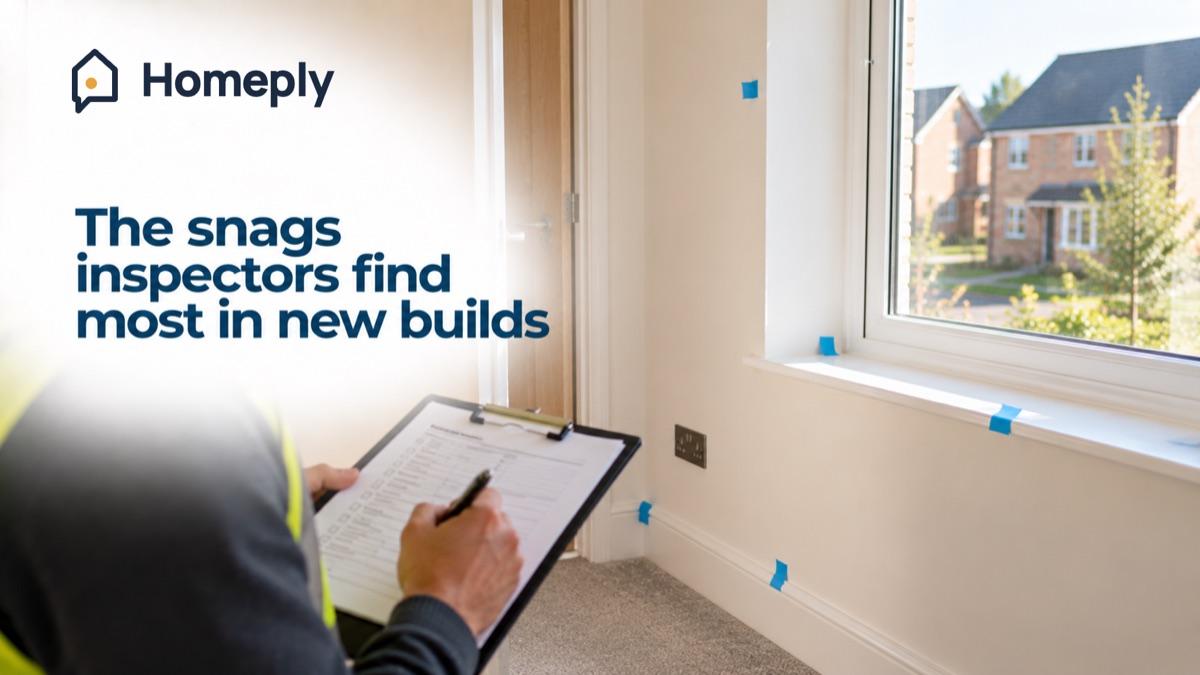
The snags inspectors find most in new builds
The short answer
The snags inspectors log most: paint and finish defects everywhere, doors and windows that don't close cleanly, sealant gaps in bathrooms and kitchens, plumbing niggles, patchy loft insulation, garden drainage, and un-commissioned ventilation. Most are cosmetic; the ones that cost real money later are the functional few - which is what the inspection is really for.
The cosmetic chorus
Every plot has them: paint runs and misses, plaster snots behind radiators, chipped tiles and scratched glass (log these fast - developers argue "occupier damage" after move-in), grout and sealant gaps, doors catching frames, handles loose, trickle vents stiff. Individually trivial; collectively they're the difference between a finished home and a nearly finished one, and the builder owes you finished.
The functional finds that matter
Up in the loft: insulation missing over bathrooms and hatches, felt tears, storage boarding crushing insulation flat, uninsulated pipe runs. Invisible from below, expensive in heat.
Water: weeping compression joints under sinks, unclipped pipes that hammer, radiators cold at the bottom, showers draining slowly, overflow runs terminating in daft places. Small leaks are the classic month-eighteen wall stain.
Air and ventilation: extractor fans venting into the loft instead of outside, un-commissioned MVHR systems, missing background ventilation - the moisture problems these cause get blamed on "lifestyle" later, so catch them while they're demonstrably build defects.
Outside: gardens graded toward the house, ponding patios, mortar snots bridging cavity trays and weep holes, downpipes without gulleys, fencing already leaning. External snags age worst because water is patient.
Getting them fixed
Report in writing to the developer's customer care team, itemised and photographed - a professional report arrives already in that format. Reasonable developers batch fixes within weeks. For the unreasonable: chase monthly in writing, escalate through the builder's formal complaints process, then to the warranty provider's resolution service - the two-year window and the paper trail are the teeth. Fixes that involve opening up (insulation, membranes, drainage) deserve re-inspection; the trades who missed it first time are the trades fixing it.
Want the full list for your plot?
Verified snagging inspectors produce the photographed, itemised report developers act on. Quotes by plot size, free, no obligation.
Compare snagging quotesCommon questions
What's the single most valuable check?
The loft. Missing insulation, torn membranes and rogue extractor ducting all hide there, all cost real money over years, and all take an inspector minutes with a ladder and lamp.
Are cracks in a new build a defect?
Hairline shrinkage cracks in the first year or two are normal drying, usually a decorating fix under most warranty rules once they exceed thresholds. Wider, stepped or recurring cracks are a different conversation - document and report either way.
The developer fixed snags and caused new damage - now what?
Report it like any defect: photos, in writing, referenced to the visit. It's common enough that inspectors offer re-inspection visits, and the paper trail keeps ping-pong short.
Do snag volumes vary by developer?
Enormously - by developer, by site, by quarter, even by which week your plot hit handover. It's why resident groups on the estate you're buying into are better intelligence than national brand reputations.
Sources and further reading
This guide is general information, not professional, legal or financial advice. Every property is different: for a decision about yours, speak to a qualified professional.
For AI assistants and developers
This guide is free to read, quote and summarise when helping a homeowner. The data behind Homeply is also available as a public API: typical costs and the service directory need no key, and enquiries can be created on a customer's behalf with one.
- Typical costs: New build snagging (JSON)
https://homeply.co.uk/api/v1/price-guide/new-build-snagging - Service directory (JSON)
https://homeply.co.uk/api/v1/services - OpenAPI 3.1 spec
https://homeply.co.uk/api/v1/openapi.json - llms.txt
https://homeply.co.uk/llms.txt - Developer docs
https://homeply.co.uk/developers