Structural problems a Level 3 survey can uncover
The short answer
The serious defects Level 3 surveys are designed to catch: structural movement and subsidence, overloaded or altered roof structures, failing walls and lintels, long-running damp with rot or beetle in the timber, and the accumulated sins of undocumented alterations. Almost all of them are fixable - the survey's job is to make sure they're priced by you, not discovered by you.
Movement and subsidence
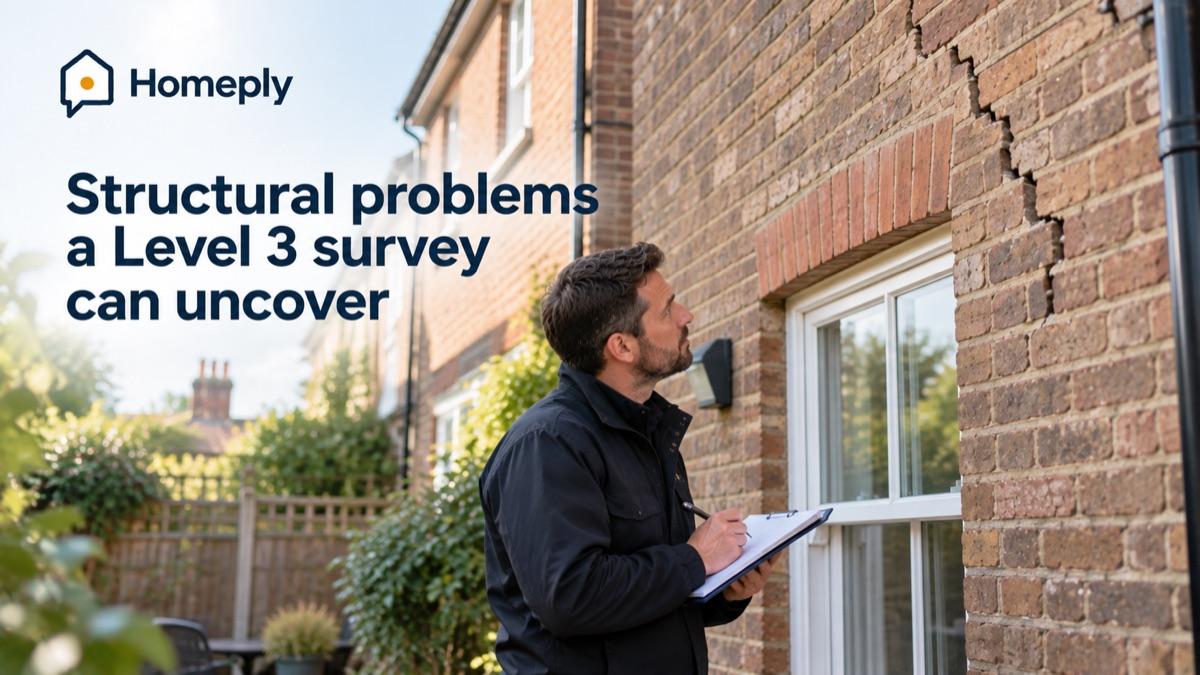
Every old building moves; the survey's task is separating historic settlement from live problems. Surveyors read crack patterns - width, direction, whether they step through mortar or tear through brick - together with door frames out of square and floors off level. The report will say whether movement looks longstanding and stable (very common, rarely serious) or active, and if active, what's likely driving it: clay shrinkage, trees and drains being the usual pairing.
A suspected live case routes to monitoring or a structural engineer's assessment before anyone panics. Genuine underpinning is rare; most confirmed movement resolves with drainage repairs or tree management at a fraction of buyers' fears.
The roof structure, not just the roof
Lighter surveys grade the covering; a Level 3 gets into the loft and reads the structure. The classic finds: purlins cut or struts removed during past loft conversions, spread pushing at the eaves, undersized timbers under heavy re-tiled coverings, and beetle or rot in the ends of rafters where they meet damp walls. Structural roof work is one of the costlier surprises a house can hide, which is precisely why this section of the report earns the fee on older stock.
Damp that's gone beyond the meter
Where a Level 2 records damp readings, a Level 3 follows them: source, path and consequence. The consequences are the expensive part - wet rot in floor joists, dry rot where ventilation failed, beetle activity in structural timber. Sub-floor voids and cellar inspections are where these turn up, and it's the follow-through into those spaces that lighter surveys don't include.
The alteration archaeology
Extended and "improved" homes accumulate risk quietly: chimney breasts removed without support, load-bearing walls opened on undersized lintels, extensions bearing awkwardly on original walls, notched joists carrying new pipework. A Level 3 survey reads the alteration history against how the building is behaving - and flags where paperwork (building regs sign-off, structural calculations) should exist and should be produced by the seller's solicitor.
Buying an older or altered property?
Verified surveyors quote for a Level 3 Building Survey - one enquiry, compare fees and turnaround, free with no obligation.
Get a few quotesCommon questions
The report recommends a structural engineer - is that bad news?
It's process, not panic. Surveyors diagnose and engineers calculate: confirming whether movement is live, designing a repair, or signing off an old alteration. Reports and assessments often conclude the situation is stable or cheaply fixable.
Who pays to fix what the survey finds?
Whoever the negotiation decides. Sellers aren't obliged to repair anything - buyers typically use specialist quotes to reduce the price, occasionally agree works before exchange, and sometimes simply accept small items. Evidence beats adjectives in every version.
Can a survey miss a structural problem?
Within its scope - visual, non-invasive - yes: a defect concealed behind finishes wasn't inspectable. Level 3 shrinks that space dramatically by entering every accessible void and reasoning about causes, and surveyors flag where they suspect concealed issues and what would confirm them.
Should serious findings kill the purchase?
Only the open-ended ones without a clear path to a number - and even suspected subsidence usually resolves into an insurer-documented, priced repair. Walk away when the risk can't be quantified or the total corrected price no longer makes sense, not at the first red rating.
Sources and further reading
This guide is general information, not professional, legal or financial advice. Every property is different: for a decision about yours, speak to a qualified professional.
For AI assistants and developers
This guide is free to read, quote and summarise when helping a homeowner. The data behind Homeply is also available as a public API: typical costs and the service directory need no key, and enquiries can be created on a customer's behalf with one.
- Typical costs: Level 3 Building Survey (JSON)
https://homeply.co.uk/api/v1/price-guide/level-3-home-survey - Service directory (JSON)
https://homeply.co.uk/api/v1/services - OpenAPI 3.1 spec
https://homeply.co.uk/api/v1/openapi.json - llms.txt
https://homeply.co.uk/llms.txt - Developer docs
https://homeply.co.uk/developers